Rail Estate

Review
All aboard
by Howie Howard
reviewed on PC
What does this railroad really look like?
Rail Estate is the new railroad simulation game by indie developer and publisher Holonautic. Is Rail Estate really "just another railroad sim" though? Well not really and we will discuss some of the particulars in the following paragraphs. So please stay with us.
When I first received the code the the game, for some reason my mind read the games title as Real Estate not Rail Estate. That's kind of funny because Rail Estate after looking in to game mechanics may not be about buying a house; but it is about buying various railroad lines which can be described as railroad rights in order to build a railroad between two towns on the map.
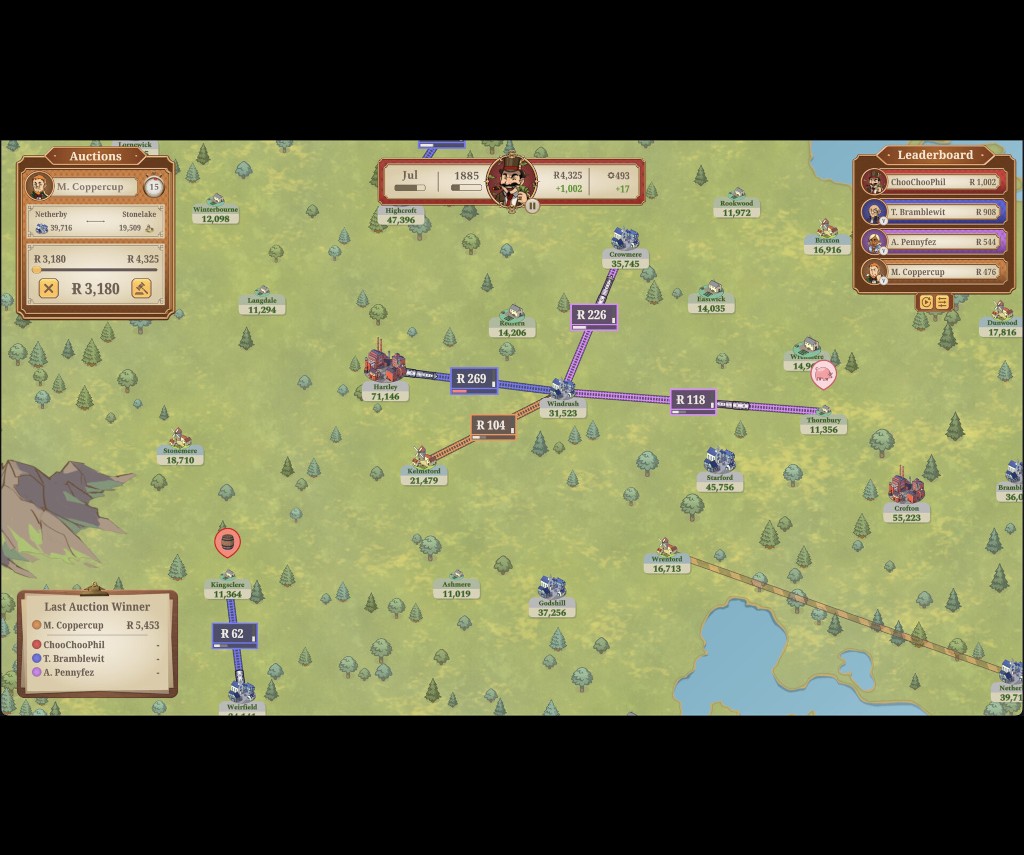
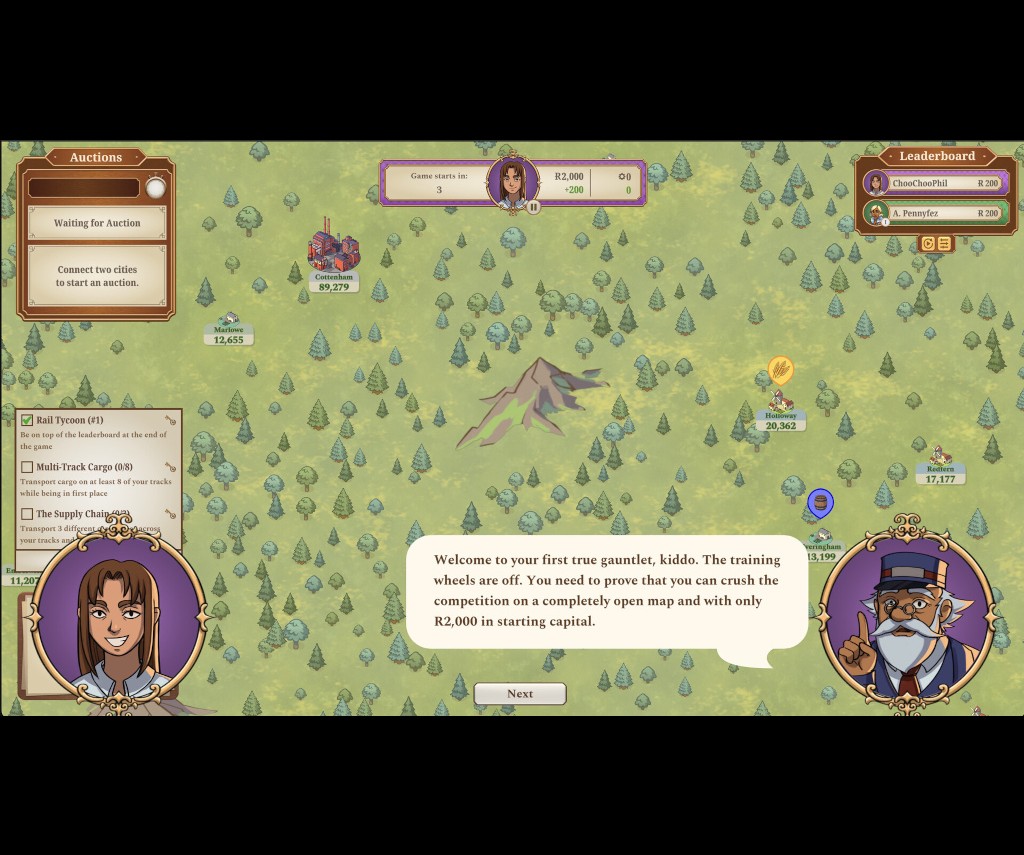
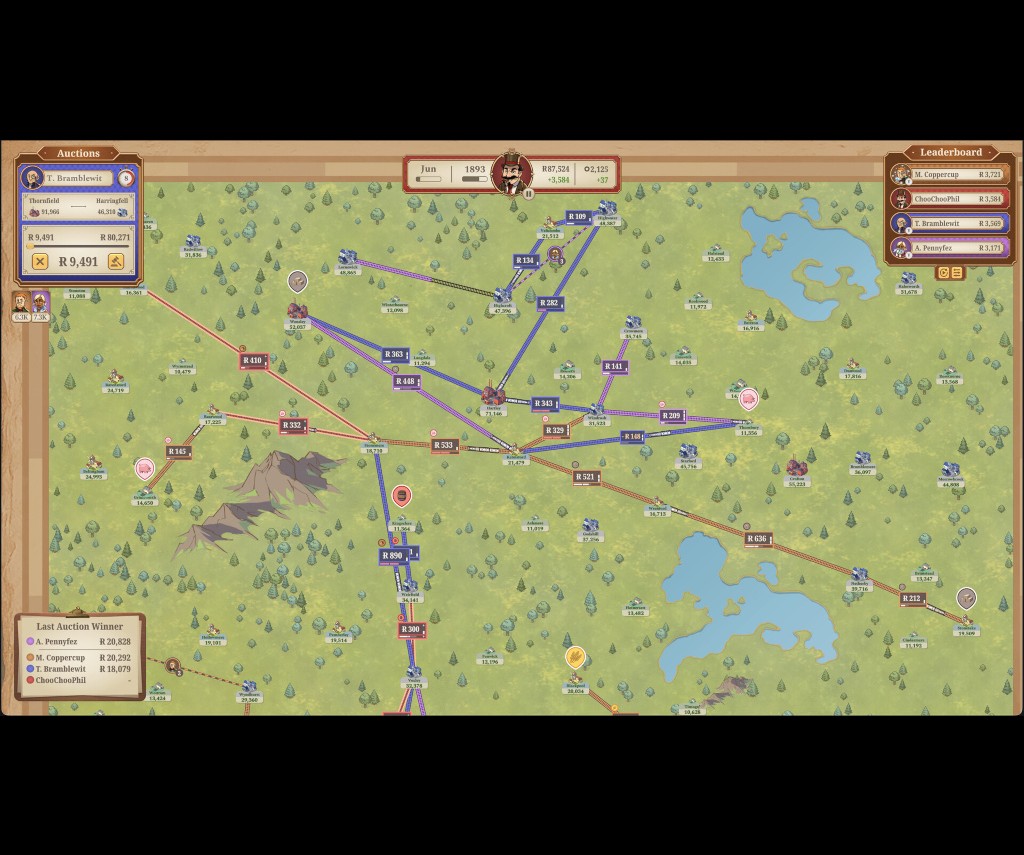
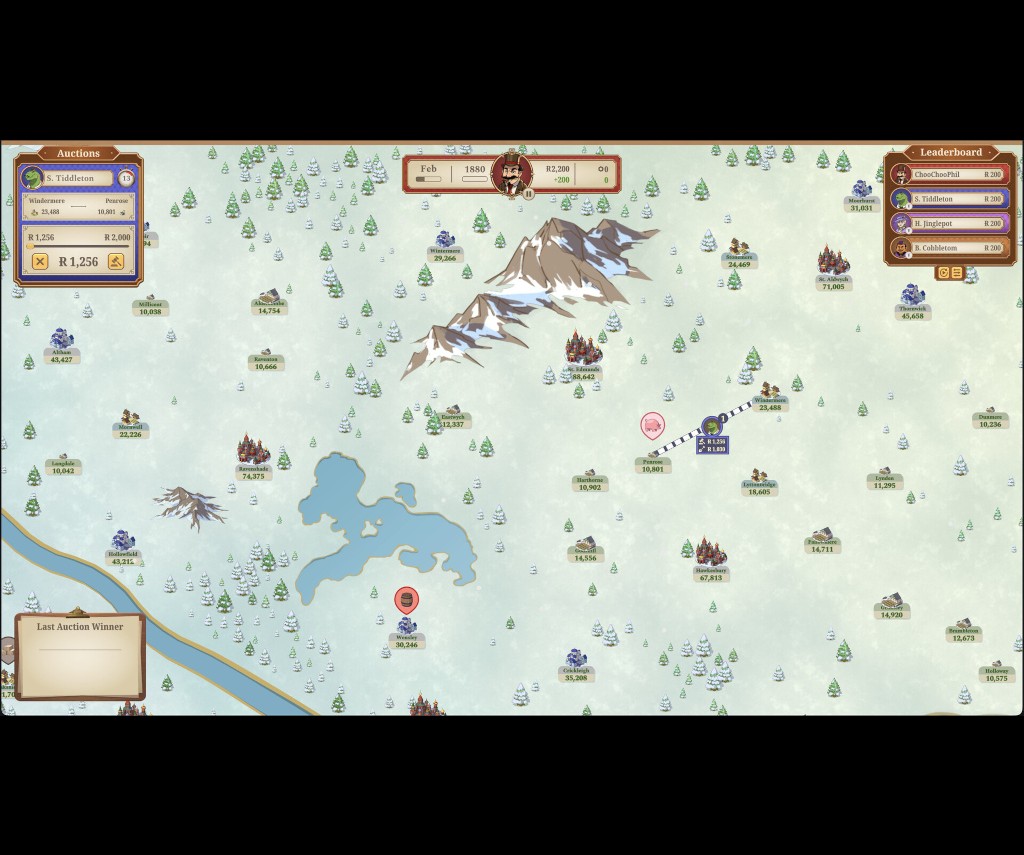
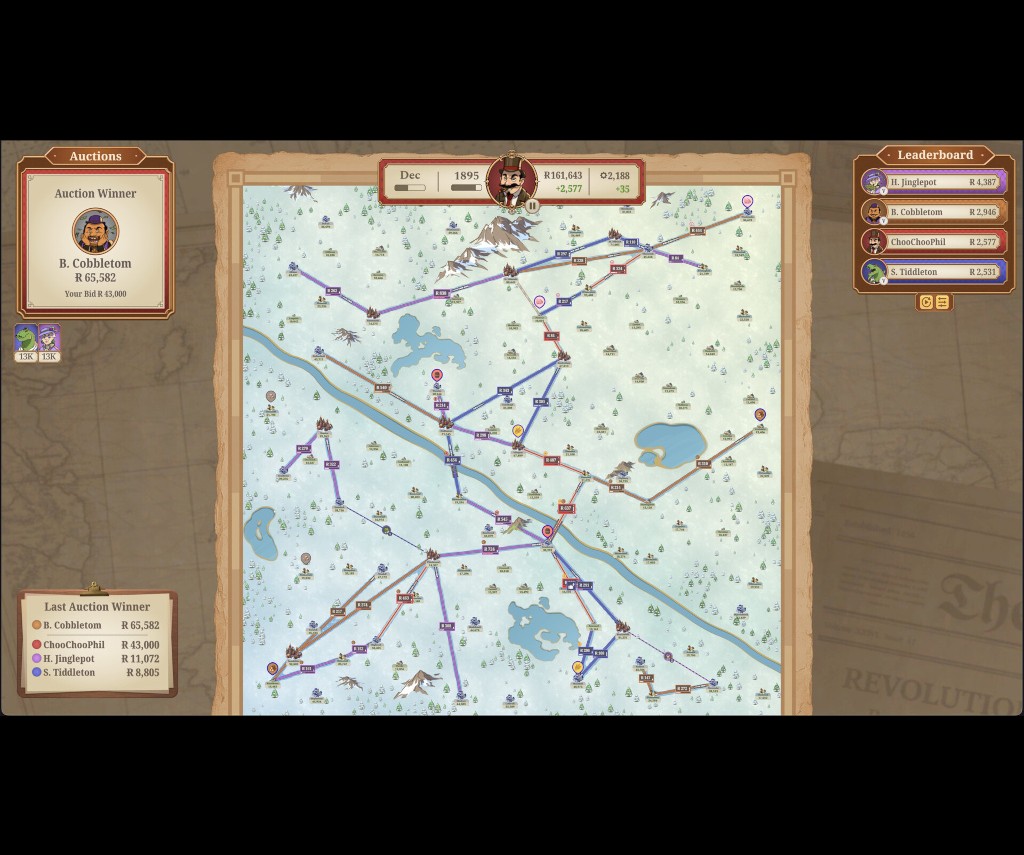
The map contains a retro kind of graphic that contains icons that represent towns, trees and lakes. At the start of the game you set up the parameters of the game by adding either AI competitors or real live humans via a multi-player online connection. Most likely the game will be played against AI entities and you can add as many as you like to your game. Replayability would seem to be possible because for each game play through a new map is randomly regenerated. Game length is controlled to some extent due to the number of competitors that are placed in each game. Also the game speed setting for the auctions will have an effect because it will cause quicker line purchase decisions to be made. Additional AI players can cause the limited numbers of possible railroad lines to be gobbled up quickly by the AI competitors and the game will end sooner rather than later.
Many deals will need to be made for this railroad to prosper.
Here's the deal with Rail Estate. It is in reality a business economic game instead of a railroad building sim when compared to railroad titles such as Railroad Tycoon and other railroad building endeavours. With that said, I would have to describe Rail Estate as being more of an economic / tactical puzzle game that relies on blind auctions as the main driver in the game. You could probably substitute the towns and purchasable railroad lines with a neighbourhood full of houses. Then you would have an actual real estate looking game and that's because house buying and selling or rail lines in blind auctions would basically be handled the same.
The object of the game is to become the most valuable railroad company in the game. As I mentioned above, the economy is based solely on blind auctions meaning that all of the rail lines on the map are up for sale. The object is to strategically buy various lines with the hope that your line will generate larges sums of profit. Strategy is a big game factor because you want to make moves that will block competitors from being able to encroach on your plans by purchasing lines that are necessary for your success. The goal is to generate money and the earned money makes further purchases and line upgrades be possible.
Endless blind auctions
Well, not really, but the game initially begins in 1880 and it ends in 1900 and depending on the number of competitors that are fighting to purchase rail lines and game time settings the game could last 10 to 15 minutes to a couple of hours. After you make each line purchase via the blind auction the next step is to pay the set fee to build the track which in turn sets a train graphic moving between two cities. There is a minimum purchase fee listed in a box on the town where the auction is started. However, since its a blind auction and you do not know what the other players are bidding or the amount of money they have available, it turns in to kind of a gambling game. The game is dominated by the blind auctions and this could be considered to be more of a puzzle game when you throw in the blocking strategies and other game techniques and tactics required to win. There is no sand box mode like in other types of the railroad games so there is no possibility to be able to sit back and watch your locomotives chug their way along the various routs on your map.
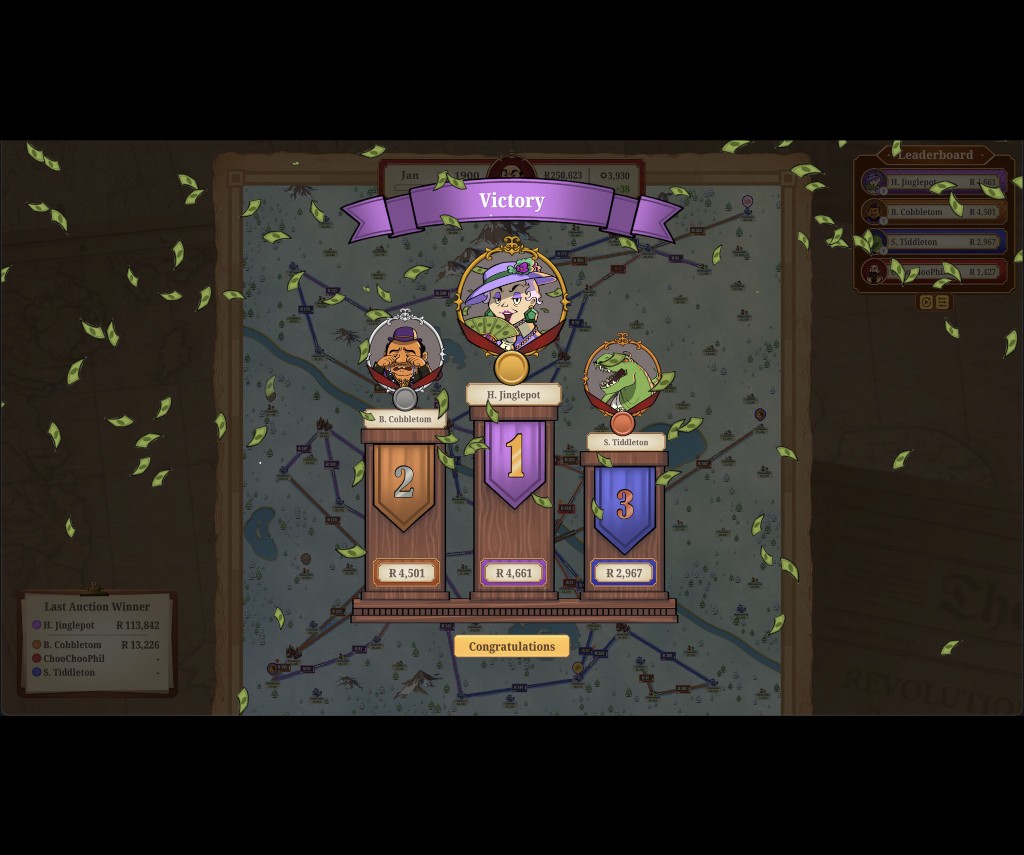
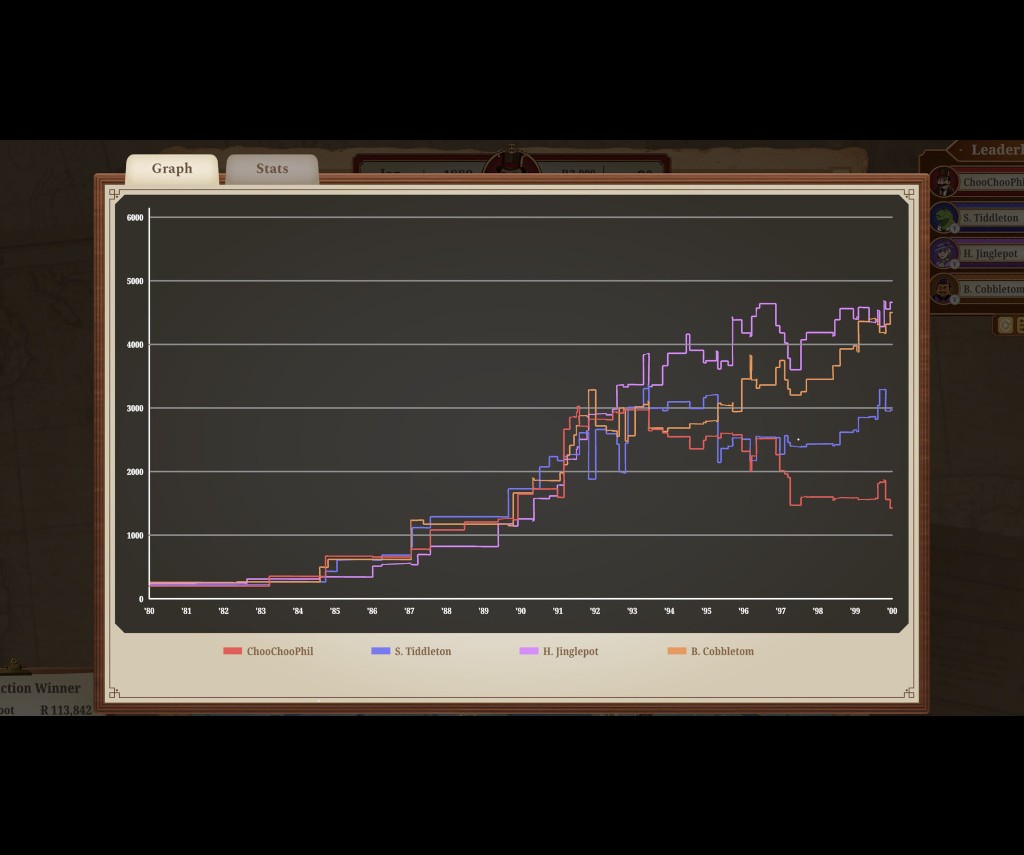
Each rail line can not be expanded as in the train from town A is eventually able to travel to town C instead of just to town B and then back to A. With every line that is added to your overall rail estate - whether by you or a competitor - it will effect the value of all of your other towns. In turn, if a competitor takes a town that you need or it blocks you by creating a better route to a large town then the value of your line will decrease. Since the goal is to be the most valuable railroad when all the lines are sold, the game will be over when that happens and the player that has the most victory points or money is declared the winner. Then you can start over again and maybe try a different game set up because there are many other game settings available.
Tactics
You make your bid and then the game determines the highest bidder. Players may luckily get the line, although you may have to rethink your strategy if you are on the losing end, which can happen time and time again. That's the beauty of this game, everything is an unknown. The bidding is quite fast and furious. The game can be paused so you can attempt to figure out a tactic, but generally speaking not knowing what the other bids are, and not having much money available in order to make a high bid your chance of getting the line might not be good. Once the pause is finished, game time automatically starts ticking away. The longer the auction goes the longer the wait is for the computer to determine the winner. So it is kind of a two edged sword in that a short auction setting makes the game go faster but the flip side is that you have to hurry up to act or lose out if time runs out. Only one auction per month or game tick is allowed.
Yes, it is all about the blind auction and the railroad building is very limited in scope. There are three typed of rewards or payments that are made by the game after each game month ends. The first pay out is profit from the lines and the money earned is called victory points. These victory points are used to purchase additional lines and also to build train track. Victory points determine the games winner. Each month you also earn cogs and these are used to maintain each line when the town box turns red. The final payment is hearts and those are used to upgrade the town levels. Note, you can buy a new line but if you don't have money left after the line purchase you have to wait until the new month starts to build the track.
An enjoyable ride
Folks, Rail Estate is an interesting game. If you are expecting to have a railroad building and management game complete with new engine and train technologies that corresponds with each advancing era, you will have to look elsewhere. Detailed track laying and train empire is not what Rail Estate is about. Rail Estate is all about being quick on the draw in the blind auctions. The auctions are what the the game is centred around. Think about an economics strategy puzzle style of game when pondering this one. That's basically what Rail Estate is. However, Rail Estate is a different kind of experience and it does have considerable replayability. The numerous game settings and numbers of competing AI players are present to change up game play. With that said, this new addition to the strategy / puzzle genera of computer gaming is well worth the ticket price to ride the rails, or rather the rail estates.
As always, follow Hooked Gamers on Instagram for news updates, reviews, competitions and more.
8.3
fun score
Pros
A railroad themed game that could be called one of a various number of other theme based names.
Cons
Maybe a bit too much blind auctioneering and not enough actual railroad building and train management.