STAR WARS: Galactic Racer


Review
An (inter)stellar blend of classic arcade racing and modern skill expression
by Jordan Helsley
reviewed on PC
Living Legend
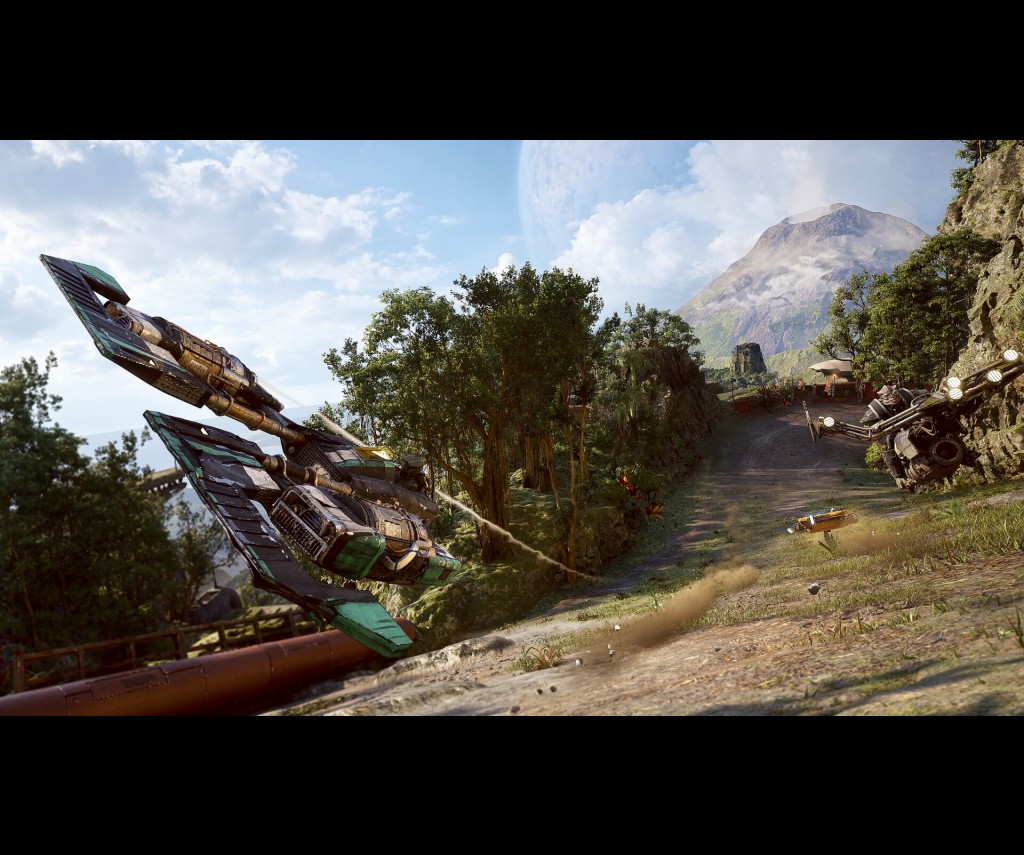
Star Wars: Galactic Racer does an incredible job of acting as a worthy successor to those two long-dormant franchises by borrowing their best elements. From Racer, there are the technically-flying-but-not-actually-flying vehicles, the Star Wars locations, system malfunctions, and the boost that can kill you if you don't manage it properly: the Ramjet, which builds up heat toward the Redline. Burn through the Redline section and you explode. From Burnout, there is the "rubbin' is racin'" mentality, a risk-free boost (the Afterburner, though not as fast as the Ramjet), plenty of Takedowns, and the muscle memory that comes with them. Muscle memory that includes trying for a last-ditch Takedown because you know the action camera cutaway will save your life from an impending crash, and frantically trying to sway the gamble of that same camera in your favour as it hands control back inches away from another death.
If you haven't been indoctrinated into either of these arcade racers, here's what you'll get out of the gate: frantic and thrilling high-speed races where you're constantly on the boundary between being in and out of control. Galactic Racer is about finding ways to go faster for longer while maintaining absolute control through both minute movements and sweeping drifts, and everywhere in between. To use an example from the game, it has no fewer than three tutorials that include the accelerate button, but it never once tells you how to brake. I was several hours in before I confirmed that, yes, the left trigger is brake, but you won't be using it much.
Eyes on the Prize
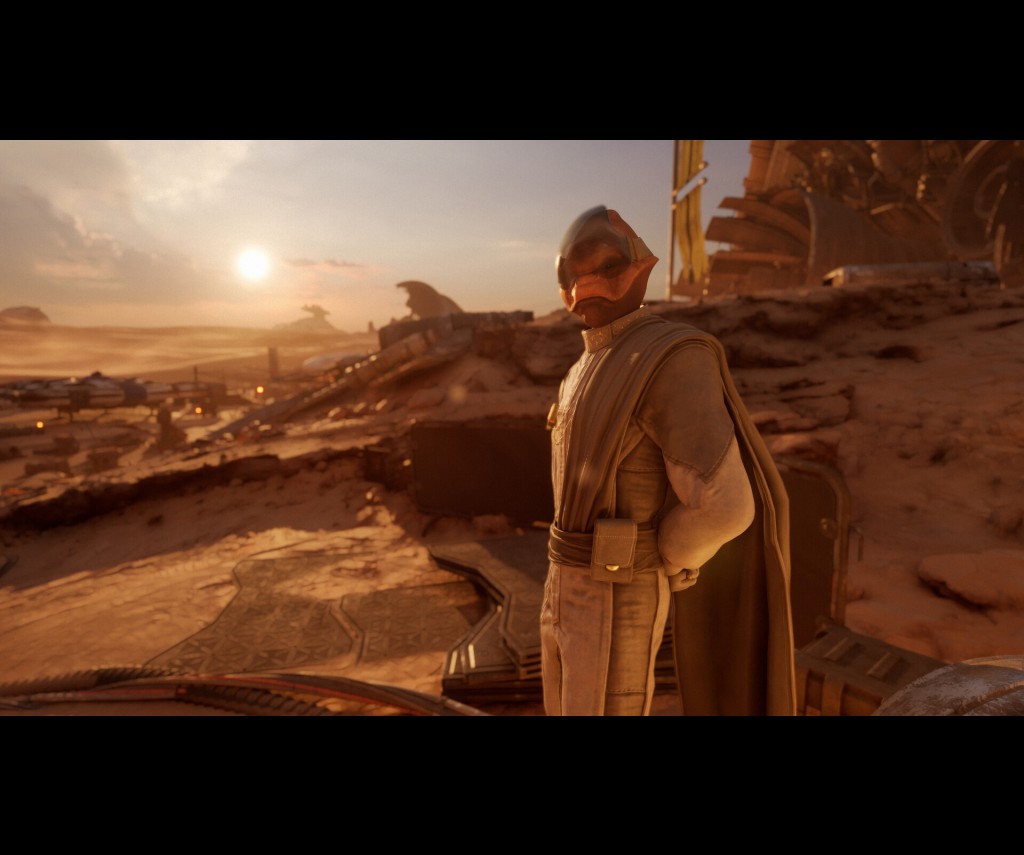
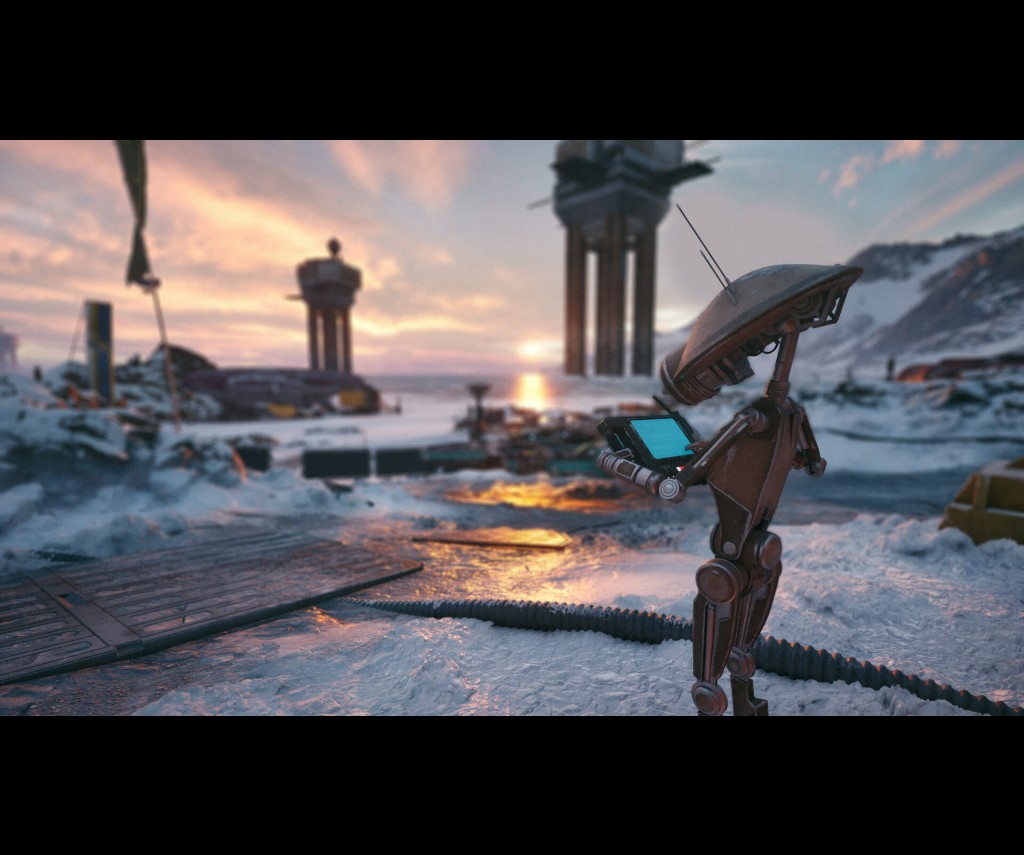
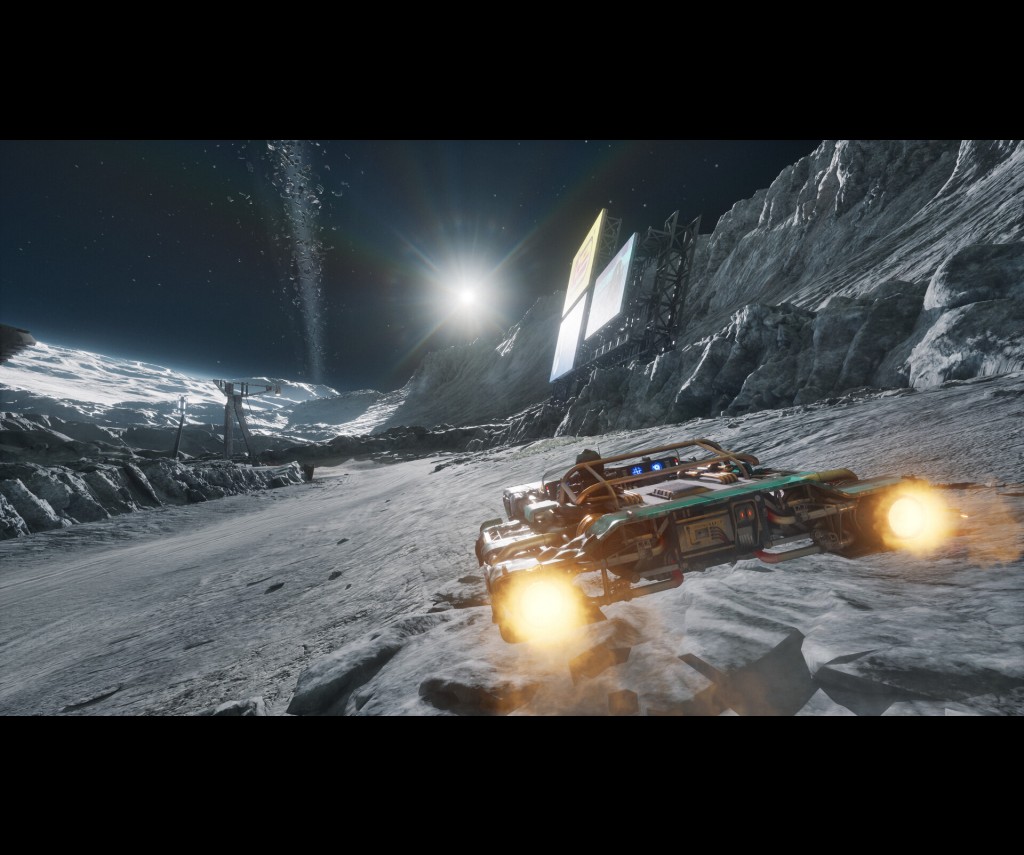
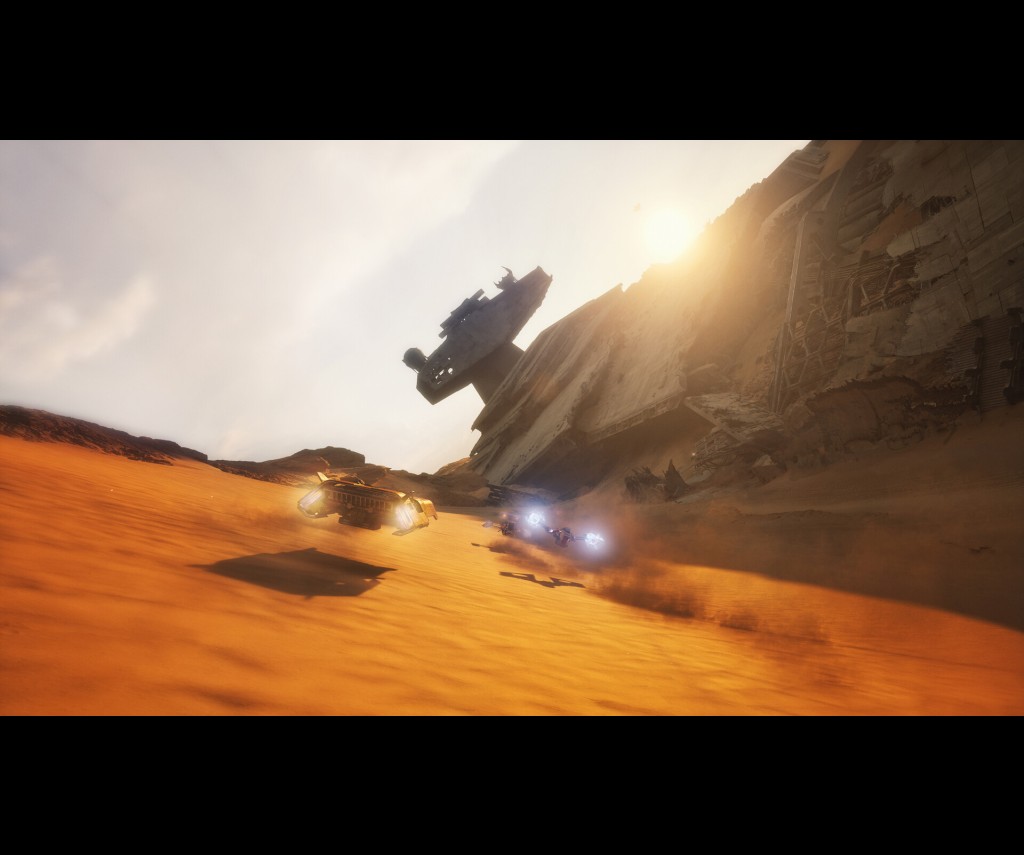
One look at Star Wars: Galactic Racer reveals a beautiful game, but in motion it's something else. The red mineral soil of Crait comes alive in the wake of the racers, and the harsh desert of Jakku feels overwhelmingly hot as the sun shines unimpeded, but they're both clearly recognizable as stages for racing. These courses are lovingly rendered, of course, and while plenty of the base stylistic elements come from the established Star Wars franchise, the artistry of arranging and complementing those parts is never overshadowed. Even with the game's incredible sense of speed, the environments remain legible much more often than not. The game rarely explicitly tells you where to go because the level designs do such a good job of showing you not only the critical path and hazards, but also shortcuts and riskier options. So while that path ahead is of the utmost importance, the scenery begs to be admired because of its gameplay implications as well as its beauty.
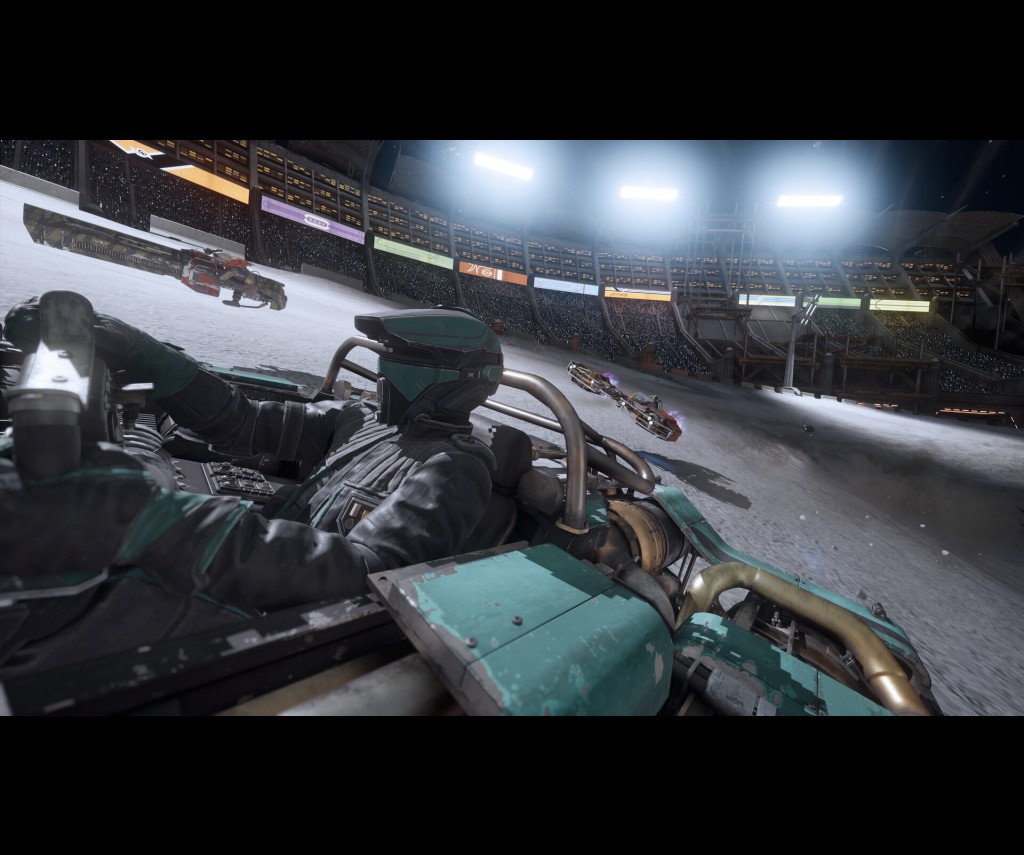
The way the game demands that your eyes constantly dart around the screen is one of the things that makes you feel like a badass racer as your skill grows and you master the many risk-versus-reward mechanics. Take the Ramjet: it offers an incredible boost of speed, but once it passes the Redline and the alarm starts blaring, the threat of blowing up grows. You can keep your eye on the meter in the bottom-right corner to know the exact moment to let go, but that means less time watching out for obstacles in your path. Juggling this with the game's abilities adds further complexity. If your Vent ability comes off cooldown in time, you can pop it to reset the Ramjet's heat back to zero, but you have to check the meter in the bottom-left corner. Do you hold out because the cooldown looks like it will finish just in time, risking an explosion, or let off the Ramjet and come back down from Ludicrous Speed for as long as it takes to cool and charge up again? Those are the balancing acts you perform with two different boosts, up to four abilities, a race course that can be actively hostile, and racers who, at best, don't care if they smack you into a wall and, at worst, want to drop a mine directly in your path.
Through all the explosions and sparks and chunks of metal and weather effects, Galactic Racer ran as great as it looked. I even completed a championship on the Steam Deck to make sure that the initial 30 FPS reading was consistent, and it mostly was, with some minor dips. Unless you're a framerate purist, it's totally playable, if not perfect.
The New-School Elements
Among the modes to get racing are Arcade, which features time-trial-based quick hitters, and the slightly longer, more varied Scenarios. While both of these can be used as a way to familiarize yourself with the maps and status effects that fill the Campaign, they're really meant as a supplement. The Campaign is where it is made clear that the systems inside Galactic Racer were heavily considered and designed to enhance each other. It's where the runs-based format earns its keep and proves that it is not a shallow attempt at padding the runtime.
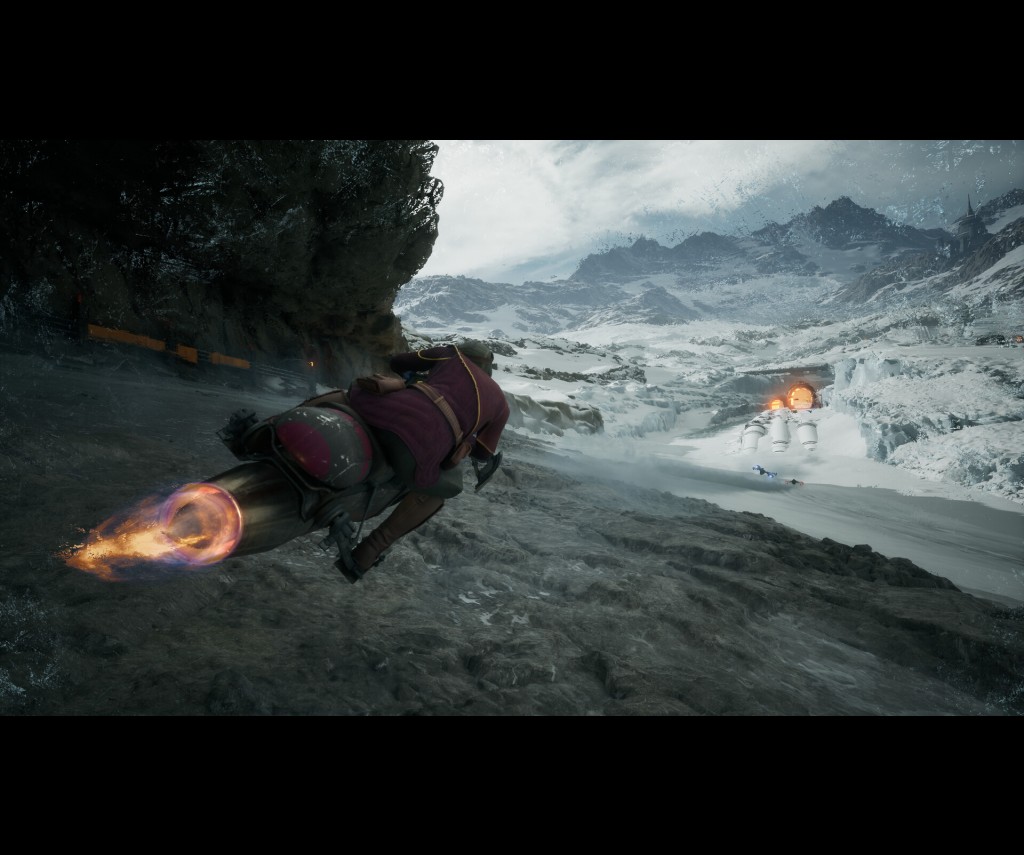
It starts with the six planets on offer (each with a handful of tracks), and the characteristics they bring to the table, often in the form of status effects. Jakku forces you to path through patches of shade to avoid Burning in the hot sun and losing afterburners while Crait forces you to be more cautious about following behind other racers so your Ramjet doesn't get Choked by the red mineral sprays. Meanwhile Sentinel I, a toxic volcano planet, ended more of my runs than I'd like to admit with its hostile acid pools that Corrode your vehicle fairly quickly (and Choke at the same time). These planets have effects that are obviously negative, and require a tangible change in playstyle to avoid, but some also have effects that are largely positive. Ando Prime is a great example: it's an ice planet that accumulates both Freezing and Cooling when out in the elements. Cooling slows the buildup of heat in the Ramjet, making it burn for longer, and Freezing makes it more difficult to turn, like you're sliding on ice. While proper pathing can both maximize Cooling time and minimize Freezing time, there's more you can do, too.
Building for Runs
While choosing between the game's three vehicles offers minimal differences in the long run, building out that vehicle with the Parts system is what can turn those negative effects into positives, or the positives into overpowering. The Burning status effect can make your Afterburner 100% stronger, Cooling can have increased effectiveness, Corrosion can recharge your active abilities. With several hundred parts to choose from, it's safe to say that significantly different builds are not only possible but expected. Because the structure of the Campaign inherently orders the planets in a progression, rather than randomly hopping back and forth, planet-focused builds can be a powerful tool, but you can also just build for playstyle, because the planets do come and go.
To go along with the Parts you're accumulating in a run, there are the game's active Abilities, which are also designed to influence or mesh with certain playstyles. Some are more active in the sense that you're laying mines or shooting an Ion Bolt to briefly disable the racer ahead of you, and some are more passive, like a literal Autopilot to take over for you for a few seconds. These abilities usually complement the upgrades you apply to your vehicle, for stats like cornering ability, defensive resiliency, and afterburner speed, all of which contribute to baseline speed as those numbers increase. Those upgrades are also the inter-run persistence: each vehicle can get up to 15 so you're not truly starting from zero every time.
There's a ton of depth to these systems, so much so that the preceding 500 words barely scratch the surface, but that is the fun in Galactic Racer. Learning those interconnections on a deep level, and mastering the ability and cooldown juggling necessary to maximize speed, is what makes this a racing game to come back to when there aren't hundreds of different vehicles and/or tracks to choose from. The racing itself is great, and the variety of those runs makes it incredible. Now, if a roguelite isn't really your thing, there is a difficulty setting, and turning that down to easy offers a fairly low-friction way to beat the story and get the unlocks that come with that, such as different visual models of each vehicle, and more Scenarios to play.
This Isn't Podracing
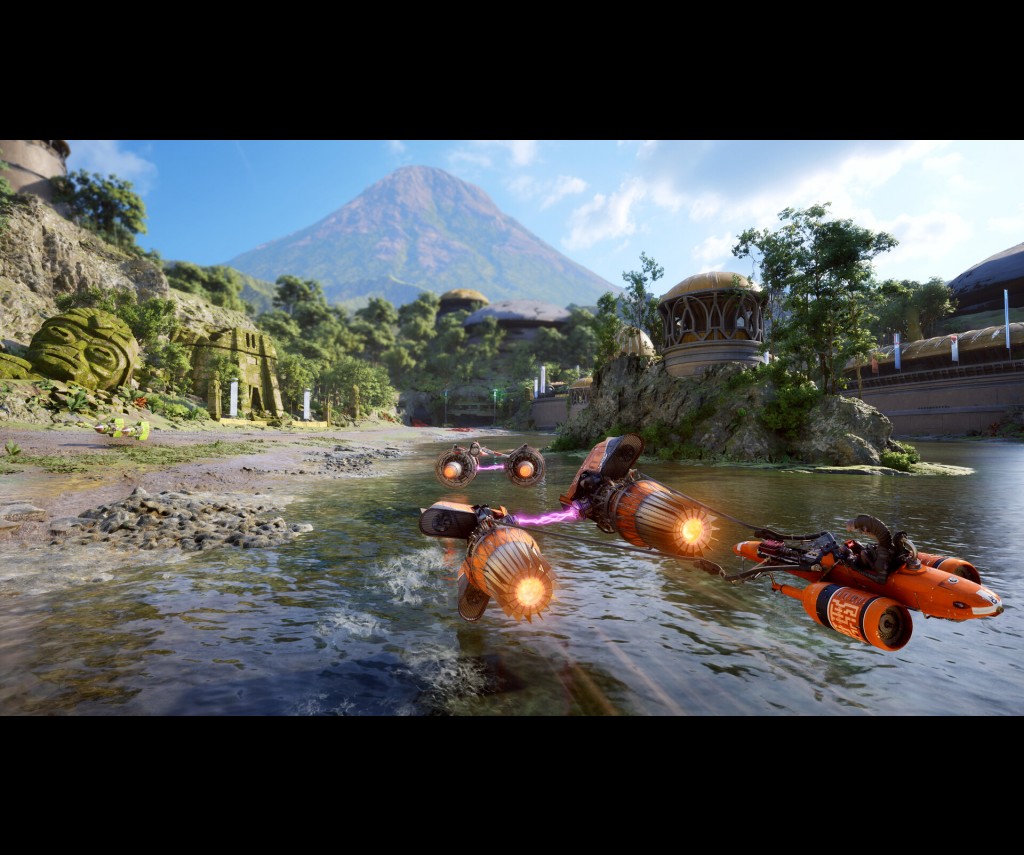
If there's one biggest surprise in Galactic Racer, it's the story. You play as a faceless racer named Shade, who has been subjugated their whole life by the Bool conglomerate, and the Galactic League is one way Shade can air out that grudge, since the league's darling and reigning champion is none other than Kestar Bool, spoiled son of the ones with the real money and power. That would have been enough on its own, but that story unfolds over three acts (three completed runs, essentially), and has more depth than expected, too, both in the narrative and in the passing conversations Shade happens upon when arriving at a new planet and preparing for the first race. There's seriously sharp writing in those spaces, and in direct character interactions, that reference the outside world, the fall of the Empire, what happened to podracing, and much more. Some familiar faces will show up, and yes, there will be podracing.
As good as the story is, it's also responsible for the only real area in which the game misses the mark. Once the story is done, subsequent runs through the league take place inside the third act of the story. Unfortunately this means playing story-critical "side races" in each one of them. Those races are great the first time through, because of that story they're telling, but afterwards they end up being more of a waste of time because there is nothing tangible to gain from them, no parts or upgrades, etc. If they were to strip those moments out, those final runs would feel much better, especially since similar ones are already added into the runs as distinct events. You can also replay the story from scratch in a New Game + sorta way, but that felt like a worse alternative as I was going through the early game tutorials again.
Beyond the League
One reason to actually finish multiple runs, beyond the experience, is to unlock some or all of the dozen different cosmetic Models of each vehicle, and the dozens of liveries and colourways, all of which carry over to the multiplayer customization, and might actually be my favorite part of the game. Each unlocked model opens up those parts when editing your vehicle, which allows you to make some truly beautiful abominations of asymmetry by mashing those parts together, with individually addressable front/back and left/right wings/engines, etc. With a longer tail of support and additional cosmetic options I expect that to get even weirder in the best way.
That multiplayer, by the way, is thrilling in a way the single-player content rarely matches. The primary mode, a 5-planet tour against 11 other players, is basically a slightly pared-down version of the Campaign, and it's great. It feels faster, more chaotic, and so much more dangerous as everyone is gunning for everyone else, throwing their vehicles from side-to-side in a way that the AI just never does. There are shorter Quick Races, but the mini-run seems well-suited for this game, even if it does take up a bit of time to complete one championship.
Victory Laps
It feels impossible not to get addicted to Star Wars: Galactic Racer. I booted up what I thought would be a level-based racing game and 30 hours later I'm thinking about my next build, how to utilize this or that part better, how to beat the campaign on the highest difficulty, and when more people will be logging in online. Even as someone who is occasionally pushed away by roguelite mechanics, the systems at play here blend together seamlessly, with little friction and maximum fun. It feels as tight as any modern racing game, and as chaotic as the arcade racers of old. And its legacy should be that of a trendsetter and reinvigorator of arcade racing games, combat and otherwise. It's that good.
As always, follow Hooked Gamers on Instagram for news updates, reviews, competitions and more.
9.8
fun score
Pros
Beautiful, chaotic, and performant races through every mode in the game. Intelligently designed roguelite systems complement the experience. A surprisingly good story wraps everything up in a nice package
Cons
Subsequent campaign runs after finishing the story would be tighter with the story-critical races pulled out.