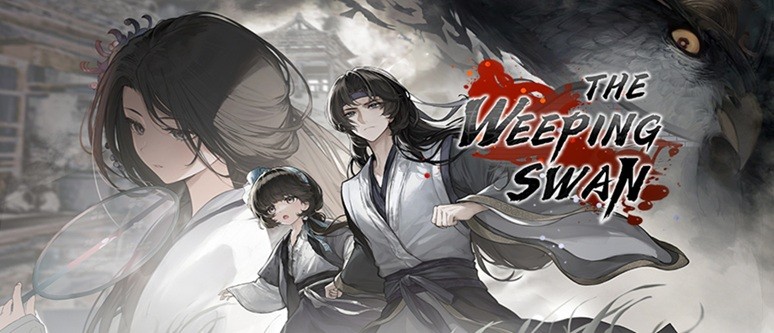
The Weeping Swan

Review
History as Nightmare
by Samuel Corey
reviewed on PC
A Companion to The Hungry Lamb
The Weeping Swan is set in the same continuity as Zero Creation's earlier visual novel, The Hungry Lamb, taking place about 15 years after the events of the first game. Again, it is set in the near-apocalyptic period of chaos that engulfed China as the Ming Dynasty collapsed and the Qing Dynasty was established. The primary action takes place during the Yangzhou Massacre (commonly called the Ten Days of Yangzhou), where rebel forces captured the city of Yangzhou and killed hundreds of thousands of civilians over the course of 10 days.
Amazingly, despite depicting the sack of a city that resulted in hundreds of thousands of deaths, The Weeping Swan is slightly less depressing than its predecessor. Rampant death and destruction are the norm here, but at least the deaths are relatively quick, and the audience is spared the prolonged and harrowing depictions of starvation that marked the previous game. It's that Zero Creation is pulling their punches so much that they are refraining from hitting you repeatedly in the solar plexus and instead contenting themselves with punching you in the head instead.
That is not to say that there is no danger. Indeed, the entire narrative of The Weeping Swan is fraught with danger, with numerous decisions in every chapter, almost all of which will result in the player's death if they make a mistake and choose unwisely. For the most part, these are just one-and-done decisions, but the game also adds in some light resource management in the form of some decisions requiring you to spend silver. You have a finite amount of cash, and if you use up all your resources in the early stages, you will be out of luck later on. This does a good job of heightening the tension around each decision, as you don't know if you are setting yourself up for disaster later on. Sure, it can be cheesed with save-scumming, but it's not like the gameplay of a visual novel is especially demanding, and you're only cheating yourself at that point.
The constant danger serves a narrative purpose as well; the game takes place during one of the largest massacres of the early modern world, and feeling safe would damage the setting's verisimilitude. I am not an expert on Chinese history, so I cannot speak about how accurate The Weeping Swan is with its depiction of the massacre or the specifics of late Ming/early Qing Chinese society more broadly. However, the world certainly feels authentic to the player, historical accuracy or no. There are the occasional flubs, like when a slaver is referred to by the modern politically correct term of "human trafficker," but these are fortunately the exception rather than the rule.
Unreliable Narrator
The biggest difference between The Hungry Lamb and The Weeping Swan is the protagonist. In The Hungry Lamb, the player was put into the perspective of a bandit swordsman named Liang, who, despite his checkered past and less-than-stellar social skills, was a certified bad-ass who could reliably fight his way out of any difficult situation he found himself in. In The Weeping Swan however, the player will take on the role of a scholar named Fang Zhiyou, who is so much of a pussy that he cannot even kill a rebel soldier when he's armed with a knife and the soldier is distracted. After that incident, I started to view every stand and fight option the game presented me with as an elaborate form of suicide.
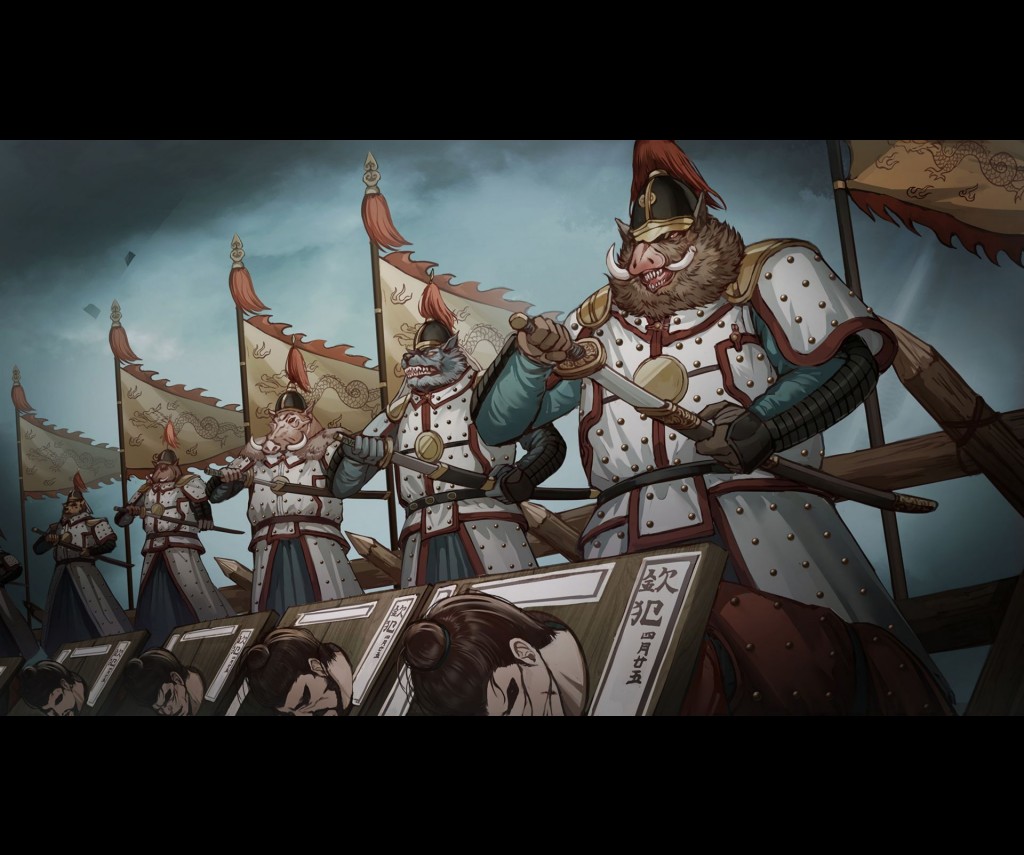
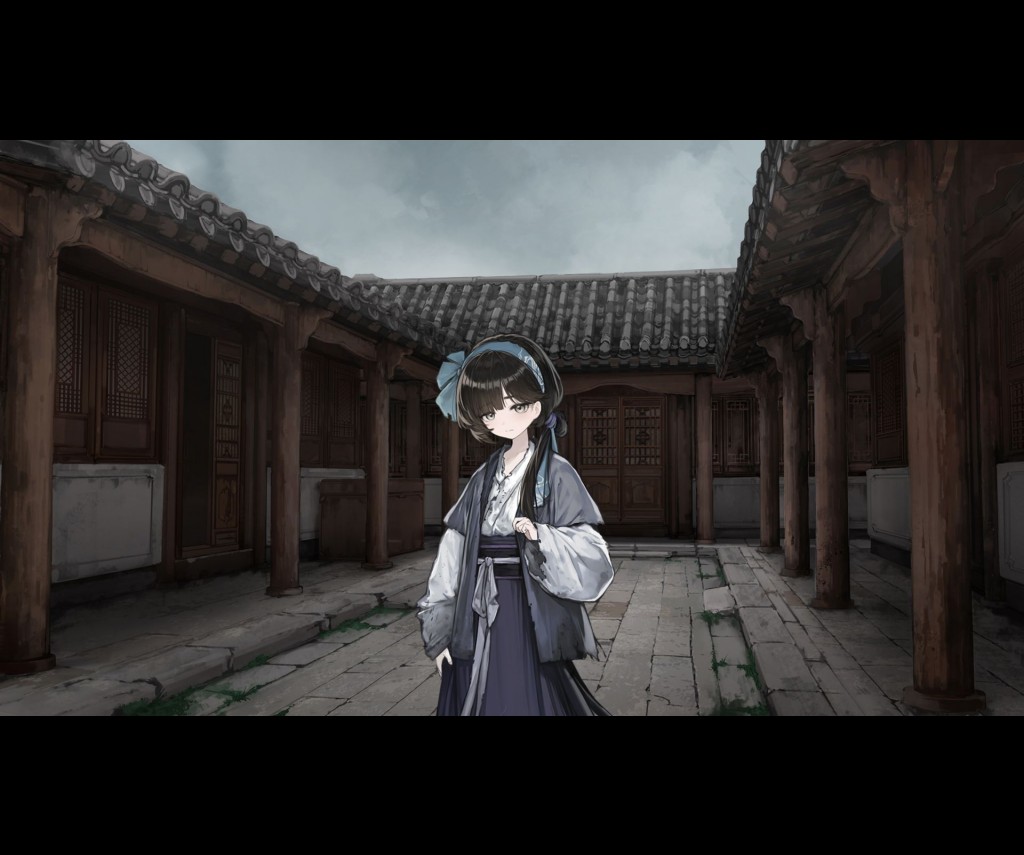
However, Zhiyou is interesting for more than just his martial ineptitude. He suffers from periodic delusions where he sees all the people around him as anthropomorphic beasts. Additionally, madness and alcohol have addled his mind to the point where his memory of his own past is more than a little shaky. It's hard to tell what he has forgotten and what he has just invented. Whatever semblance of mental stability he has at the start of the game melts away after the city falls, and he begins to view the invading rebels as all manner of beasts and demons and believes that he is trapped in The Lion Camel Kingdom, a nightmarish realm from Journey to the West.
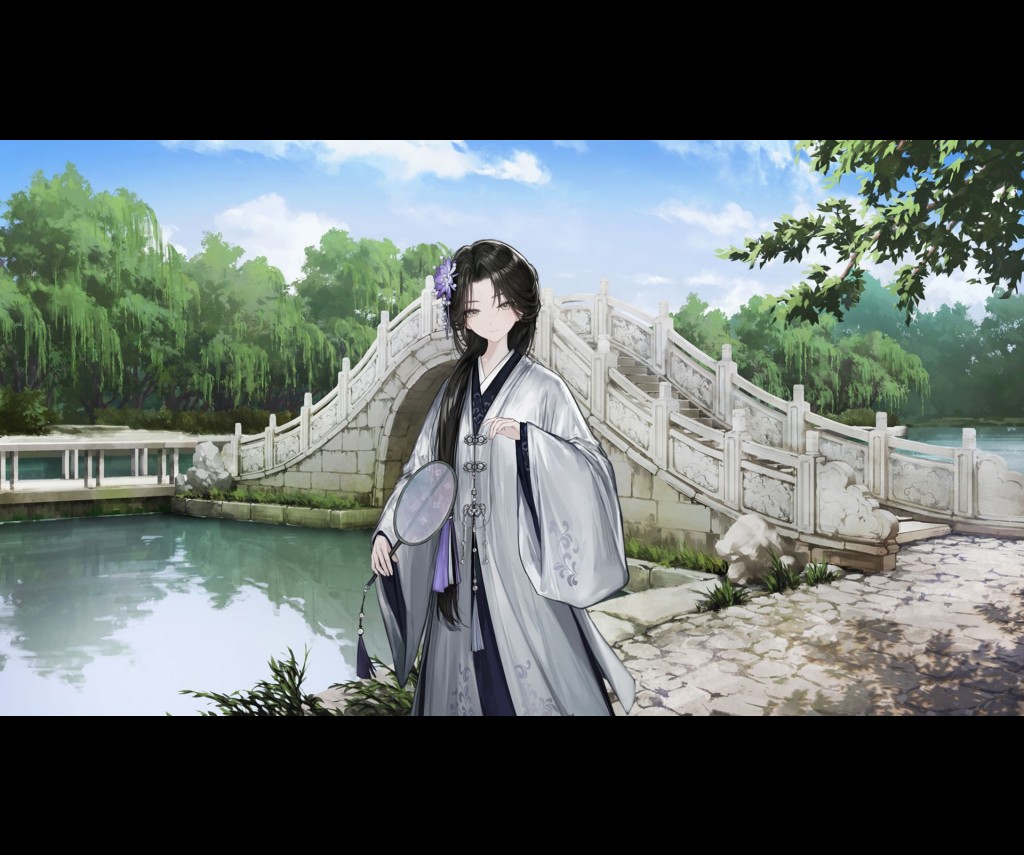
Additionally, he is tortured by fragmented memories of Su Lianyan, a girl he met in childhood who later became a courtesan and still later killed herself by drowning. The exact nature of their relationship is hazy at the beginning, as are all things related to Zhiyou's memories, but it's obvious that she is very important to him and that her death affected him greatly. Indeed, shortly on in the story, the player learns that her death coincided with the start of Zhiyou's madness.
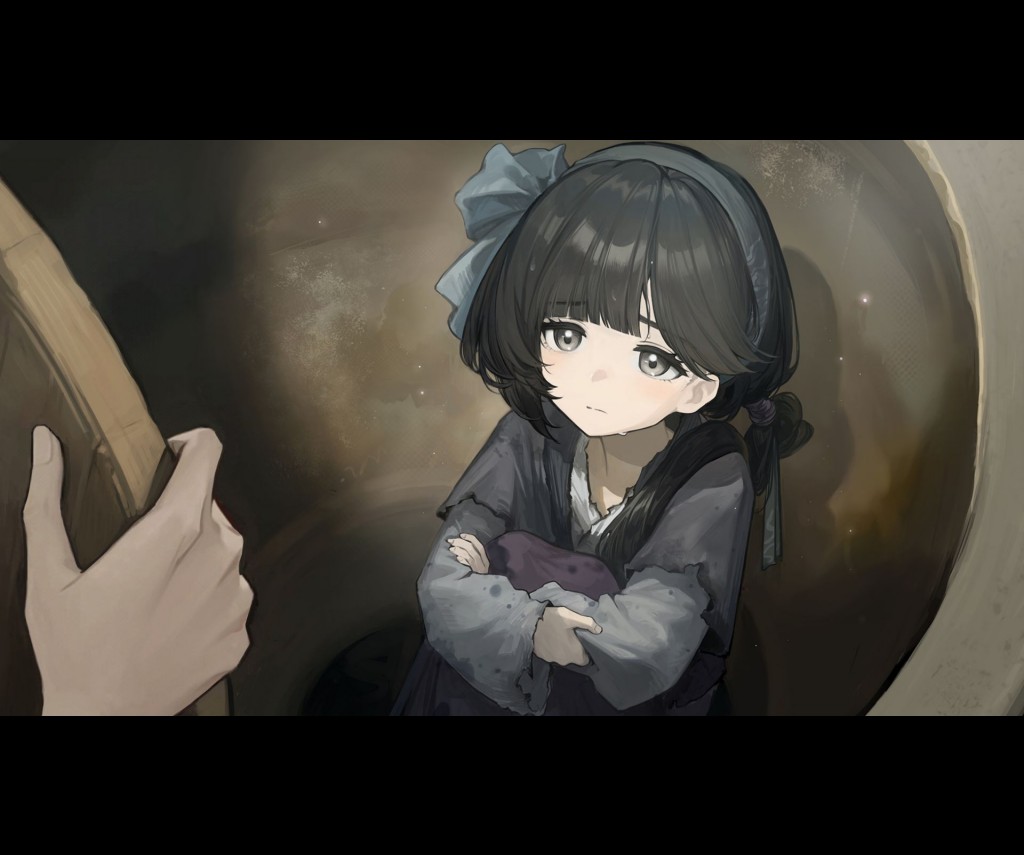
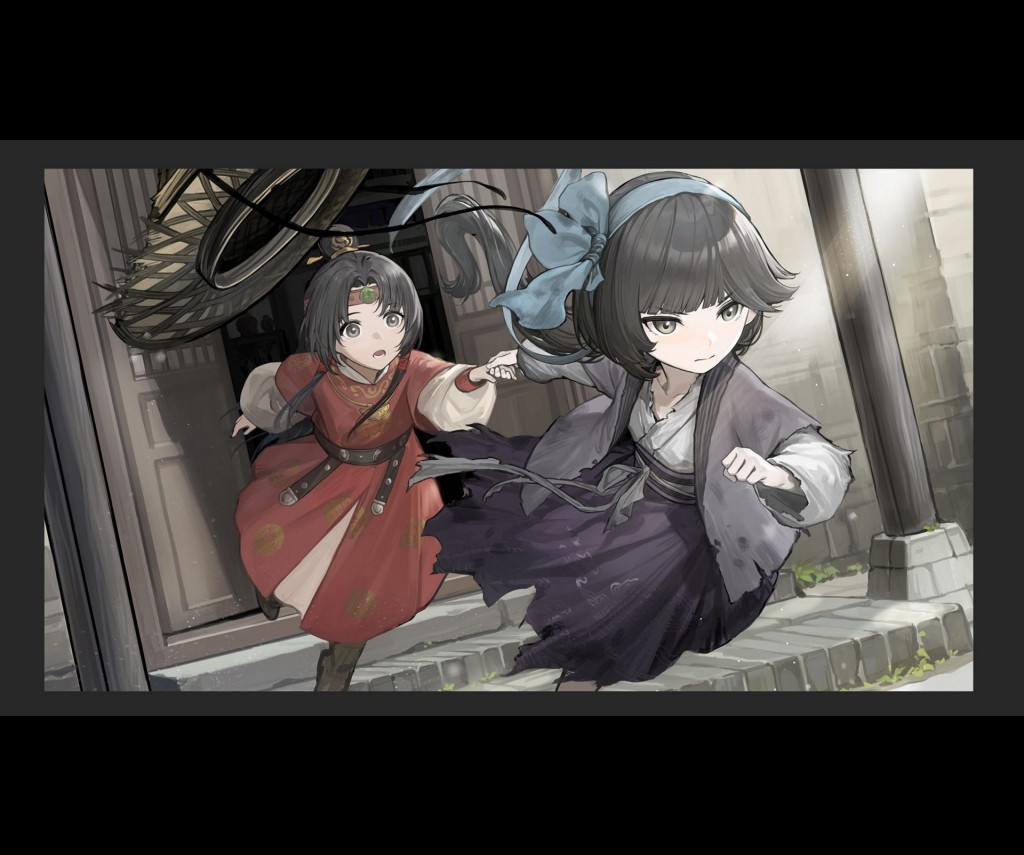
The result is that we can never really trust aspects of the story that we see in front of us, because we are filtering everything through the perspective of an amnesic madman. Most players will suspect that the invaders are not actually demons from The Lion Camel Kingdom right away, and many more eyebrows will raise when Zhiyou stumbles upon a little girl who looks identical to Su Lianyan. All this happens right at the beginning, so you will know not to trust everything that Zhiyou sees and everything he remembers as the game progresses, making for a unique narrative experience.
Improvement and Degradation
In many ways, The Weeping Swan is a much more polished game than its predecessor, and nowhere is this more evident than in the translation. The Hungry Lamb was littered with issues stemming from a rough, amateurish translation. Words were misspelled, sentences were confused, and occasionally the game became downright incomprehensible. There are still occasional flubs, but they are much more minor and less frequent than the issues with The Hungry Lamb, with most of the grammatical issues being related to using the wrong tense of a verb (a quirk of English that is notoriously difficult for Chinese speakers to get the hang of).
However, the improved translation seems to have come at the cost of some technical issues. I ran into several instances where the game would repeat passages and seemingly get text out of order. Presumably, this isn't an issue if you're playing the game in Chinese, where there was greater editorial control, but for English speakers, this will prove to be an occasional issue.
As always, follow Hooked Gamers on Instagram for news updates, reviews, competitions and more.
8.0
fun score
Pros
Interesting way of handling an unreliable 1st person narrator, Strong visuals and music, Compelling world.
Cons
Text occasionally repeats itself, While the translation is a vast improvement over previous title, there are still some issues.